
24/7 Storm & leak response
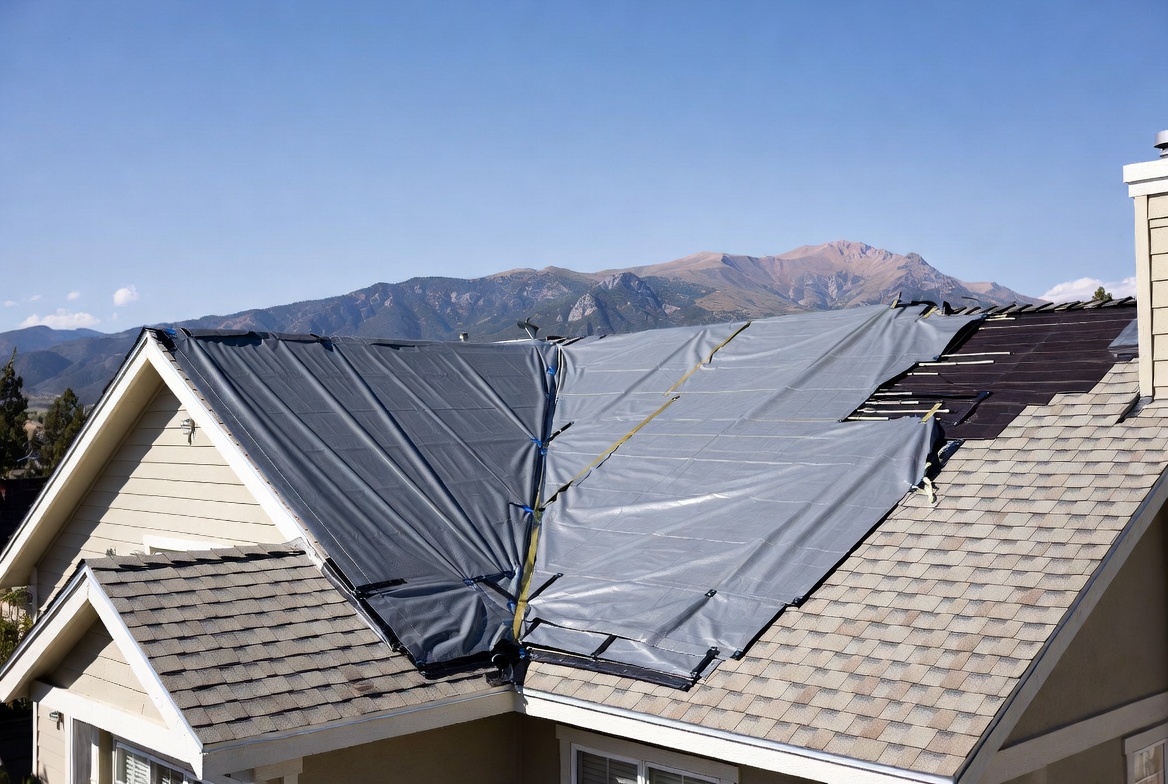
Emergency tarping and stabilization
Stop water intrusion first — then we document damage and line up permanent repair or replacement.
What we do on an emergency call
After hail, wind, or a sudden leak, the goal is to protect people, ceilings, and inventory. We install weighted tarps or mechanical anchors where safe, bag wet insulation when needed, and photo-document conditions for your insurer.
Emergency work is temporary by design. Once the deck is dry and the weather window allows, we’ll quote permanent flashing repairs, partial replacements, or a full re-roof — whichever matches the damage.
- ✓ Roof tarping & board-up — secure coverage until repairs can be scheduled.
- ✓ Interior protection — plastic containment and advice on drying when water reached the ceiling.
- ✓ Photo & written notes — organized for adjusters and your records.
- ✓ Follow-up scope — clear next steps once the storm passes.
At a glance
| Situation | First action | Documentation | Next step |
|---|---|---|---|
| Active leak | Tarp, drain path, interior catch | Photos, wet areas noted | Permanent repair quote |
| Blow-off / exposed deck | Secure edges, board-up if needed | Wind damage, missing components | Section replace or full scope |
| Post-storm (no water yet) | Inspection, vulnerable areas covered | Hail / impact mapping | Insurance + repair plan |
Google reviews
850+ reviews
Speed matters — so does the follow-through
Anyone can throw a tarp; you’re hiring for how the crew works at height in bad weather and whether the company still answers after the headline storm passes. Our reviews reflect both the emergency visit and the permanent fix.
Helpful guides
Once the roof is stabilized, review hail damage warning signs and repair vs replacement so the permanent scope is easier to plan.
FAQ — emergency roofing
How fast can someone get here?
We prioritize active leaks and unsafe conditions. Wait times spike region-wide after major hail; call as soon as you see damage and we’ll give an honest ETA.
Does tarping count toward insurance?
Many policies cover reasonable emergency mitigation, but coverage is between you and your carrier. We provide invoices and photos that match what adjusters typically ask for.
When do we schedule permanent repairs?
After stabilization and often after adjuster review. We’ll send a written quote for the permanent work and get you on the calendar for the next safe weather window.
Is it safe to stay in the building?
If ceilings are sagging or electrical fixtures are wet, treat it as unsafe until evaluated. We’ll flag obvious hazards on arrival and recommend when to involve your facilities or fire safety contact.
Do you work weekends?
Yes — severe leaks don’t wait for Monday. After-hours dispatch may vary by crew availability; calling the main line is the fastest way to reach on-call staff.
After the emergency
- 1 Stabilize Tarp, drain paths, interior protection.
- 2 Document Photos and notes for insurance.
- 3 Scope Permanent repair or replacement quote.
- 4 Restore Final install and warranty paperwork.
Need help now?
Call or leave a callback
Describe the leak location and whether water is spreading — we’ll prioritize the visit.