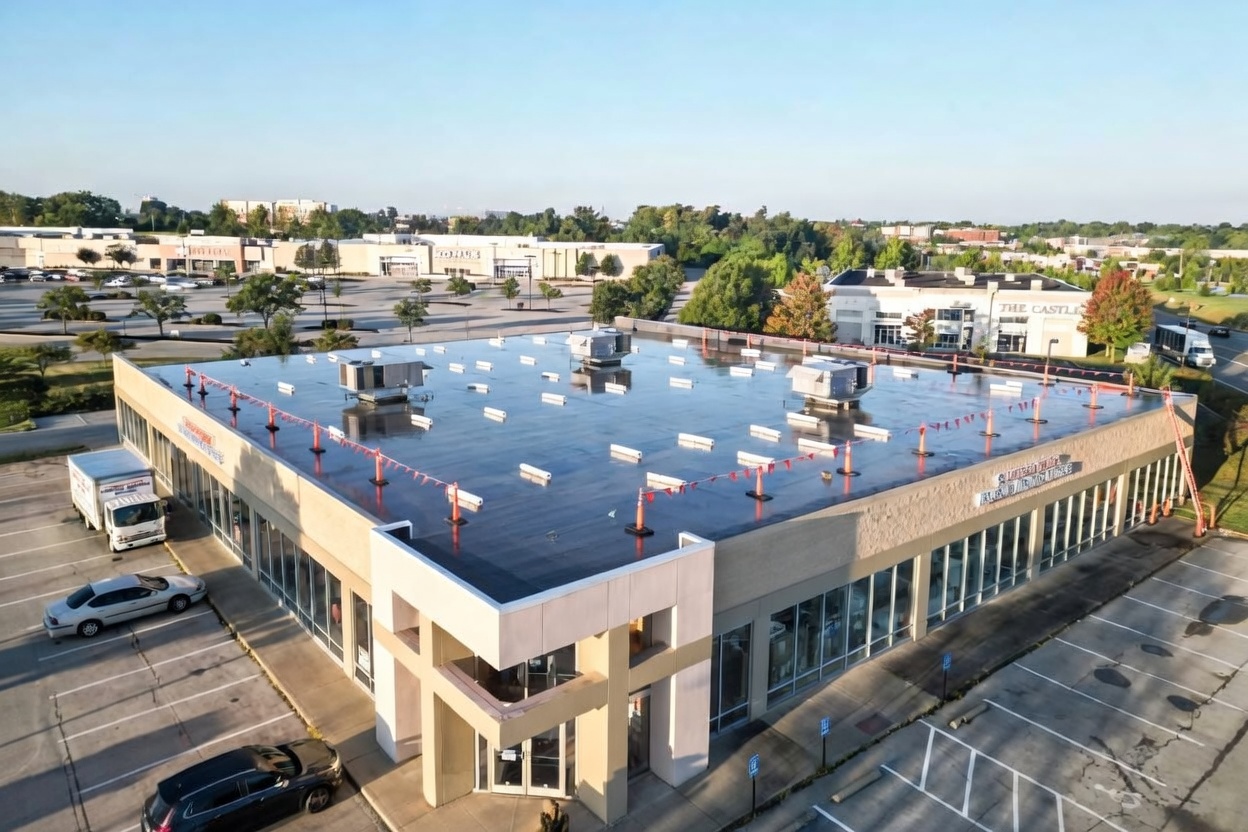
Offices, retail & industrial
Commercial roofing built around your operations
Low-slope systems, phased tear-offs, and crews who respect tenants, docks, and safety rules.
What we install & manage
Commercial roofs fail from drainage, detail work, and deferred maintenance — not just membrane age. We start with core samples, infrared or visual moisture checks when needed, and a scope that separates must-fix items from capital planning.
Whether you need a full replacement, overlay where code allows, or a coating program, we coordinate crane time, dumpster placement, and daily cleanup so your team isn’t fighting the job site.
- ✓ TPO & PVC — heat-welded seams, reflective surfaces, and manufacturer details at curbs and HVAC stands.
- ✓ EPDM — ballasted, adhered, or mechanically fastened assemblies for the right wind zone and warranty tier.
- ✓ Modified bitumen & built-up — multi-ply transitions, flood coats, and tie-ins to metal edge systems.
- ✓ Metal & steep adjacent areas — shop-fabricated coping, gutters, and wall flashing that terminate above the membrane field.
At a glance
| Membrane | Attachment | Reflectivity | Typical use |
|---|---|---|---|
| TPO / PVC | Mechanically adhered or fully adhered | High (white / light) | Retail, offices, schools |
| EPDM | Ballasted, adhered, or mech. fastened | Low (black) | Warehouses, wide open roofs |
| Modified / BUR | Torched, cold app, or hot | Moderate (caps / coatings) | Small commercial, tie-ins |
Google reviews
850+ client reviews
Facility managers hire for predictability
Commercial work lives or dies on communication: daily photos, barricades that match your safety program, and change orders explained before they hit the invoice. Reviews help you see how we behave when loading docks are tight and tenants are watching.
Helpful guides
If you are budgeting capital work, start with repair vs replacement and roof lifespan planning so your next scope fits the building condition.
FAQ — commercial roofing
Can you re-roof without shutting the building?
Often yes. We phase work by roof area, maintain drainage paths each night, and coordinate HVAC and electrical penetrations with your team. If a full shutdown is unavoidable, we’ll map it in the proposal.
Do you handle warranty and manufacturer inspections?
We register systems per manufacturer requirements and schedule final inspections when needed. Warranty paperwork goes to you and your asset manager with clear coverage dates.
TPO vs EPDM — how do you choose?
We weigh climate, foot traffic for maintenance, chemical exposure, desired reflectivity, and existing insulation. You’ll see options side by side with installed cost and warranty length, not a single “default” spec.
How long does a commercial replacement take?
Small retail pads may take a few days; large warehouses or multi-level sections can run weeks in phases. Weather, deck repairs, and insulation upgrades all affect the calendar — you’ll get a written sequence before mobilization.
Do you offer maintenance programs?
Yes — scheduled inspections, drain cleaning, seam checks, and photo reports so you can budget capital work before leaks hit the interior.
How a commercial project runs
- 1 Audit Core cuts, drainage map, and safety review with your facilities contact.
- 2 Proposal Phasing plan, fixed numbers, and warranty tier options.
- 3 Install Daily cleanup, barricades, and superintendent check-ins.
- 4 Closeout As-builts, warranty registration, and maintenance handoff.
Next step
Book a roof audit
Walk the building with us — photos, drainage notes, and a written scope for repair or replacement.